How to Cut Calories Without Going Hungry: 8 Simple Tips
ISO Customer Care | Oct 07, 2026 Life in the US
Key Takeaways
- There is no single calorie target or daily deficit that works for everyone. Calorie needs vary from person to person.
- Sugary drinks can add calories quickly. Replacing them with water or other unsweetened drinks is a simple way to reduce your calorie intake.
- Portion awareness can help you manage calories without giving up the foods you enjoy.
- Cutting calories doesn't have to mean skipping meals or counting every bite. Small changes to what you eat and drink can make your routine easier to maintain.
Studying in the U.S. may change how and where you eat. Dining halls and takeout can make portions harder to judge, while sweetened drinks and study snacks can add calories quickly. If you're trying to manage your weight, a few practical changes can help you reduce calories without making meals feel too limited.
Cutting calories doesn't have to mean going hungry or buying special diet foods. The tips below focus on realistic changes you can make while still eating balanced meals. If you have specific health needs or want personalized advice about weight loss, talk with a registered dietitian or healthcare provider.
How to Cut Calories the Smart Way
Cutting calories works best when the changes are small enough to maintain over time. Instead of skipping meals or following a highly restrictive diet, you can reduce your calorie intake through simpler adjustments, such as choosing lower-calorie drinks or changing your portions.
The Centers for Disease Control and Prevention (CDC) recommends gradual, steady weight loss. People who lose about 1 to 2 pounds per week are more likely to keep the weight off than those who lose weight more quickly. Your individual rate can vary based on your body size and activity level. Health conditions and medications can also affect it.

According to the National Institute of Diabetes and Digestive and Kidney Diseases (NIDDK), you need to choose a healthy, reduced-calorie eating plan that meets your nutritional needs and that you can maintain over time.
8 Easy Ways to Cut Calories Without Going Hungry
The most useful ways to cut calories are the ones you can maintain over time. Small changes to your drinks, portions, meals, and snacks can lower your intake without making you feel like you're constantly dieting.
1. Cut the Calories You Drink First
Drinks can add calories quickly, especially when they contain added sugar. Sweetened sodas, specialty coffee drinks, boba tea, and alcoholic beverages can all contribute to your daily calorie intake, with the amount depending on the serving size and ingredients.
CDC recommends choosing water over sugary drinks as one way to reduce calorie intake.
Some simple swaps include:
- Water or sparkling water instead of regular soda
- Unsweetened coffee or tea instead of heavily sweetened coffee drinks
- A smaller boba drink or less added sugar when the shop offers those options
- Fewer alcoholic drinks, if you're 21 or older and choose to drink
If you're studying in the U.S., carrying a reusable water bottle can make this easier. Many campuses have water fountains or refill stations, and public water systems in the U.S. are regulated under the Safe Drinking Water Act. Check local guidance if you have questions about the water where you live.

Choosing lower-calorie drinks regularly can reduce your overall intake without requiring you to change the foods you eat.
2. Right-Size U.S. Portions
The amount of food you're served isn't necessarily the amount you need to eat. CDC notes that many restaurants serve more food than one person needs for a single meal.
Paying attention to portions can help you reduce calories while still enjoying the foods you like. Try these approaches:
- Take part of your meal home: NIDDK recommends taking half of a restaurant meal home or sharing it with someone else.
- Choose a smaller portion when available: A smaller entrée, side, or drink can reduce calories without changing what you order completely.
- Check calorie information when it's provided: This can help you compare different menu options and understand how much a restaurant portion contains.
- Stop when you feel full: You don't have to finish everything simply because it was served to you.
Taking leftovers home is common in the U.S., so you can ask for a to-go container if you don't finish your meal.
3. Cook More, Order Out Less
Cooking more of your meals at home gives you greater control over portion sizes and ingredients. CDC also recommends planning meals at home as one way to make healthier food choices.
Research using U.S. dietary data has found that people who cook at home more often tend to have better diet quality than those who cook less frequently. More frequent home cooking has also been associated with lower consumption of ultra-processed foods.

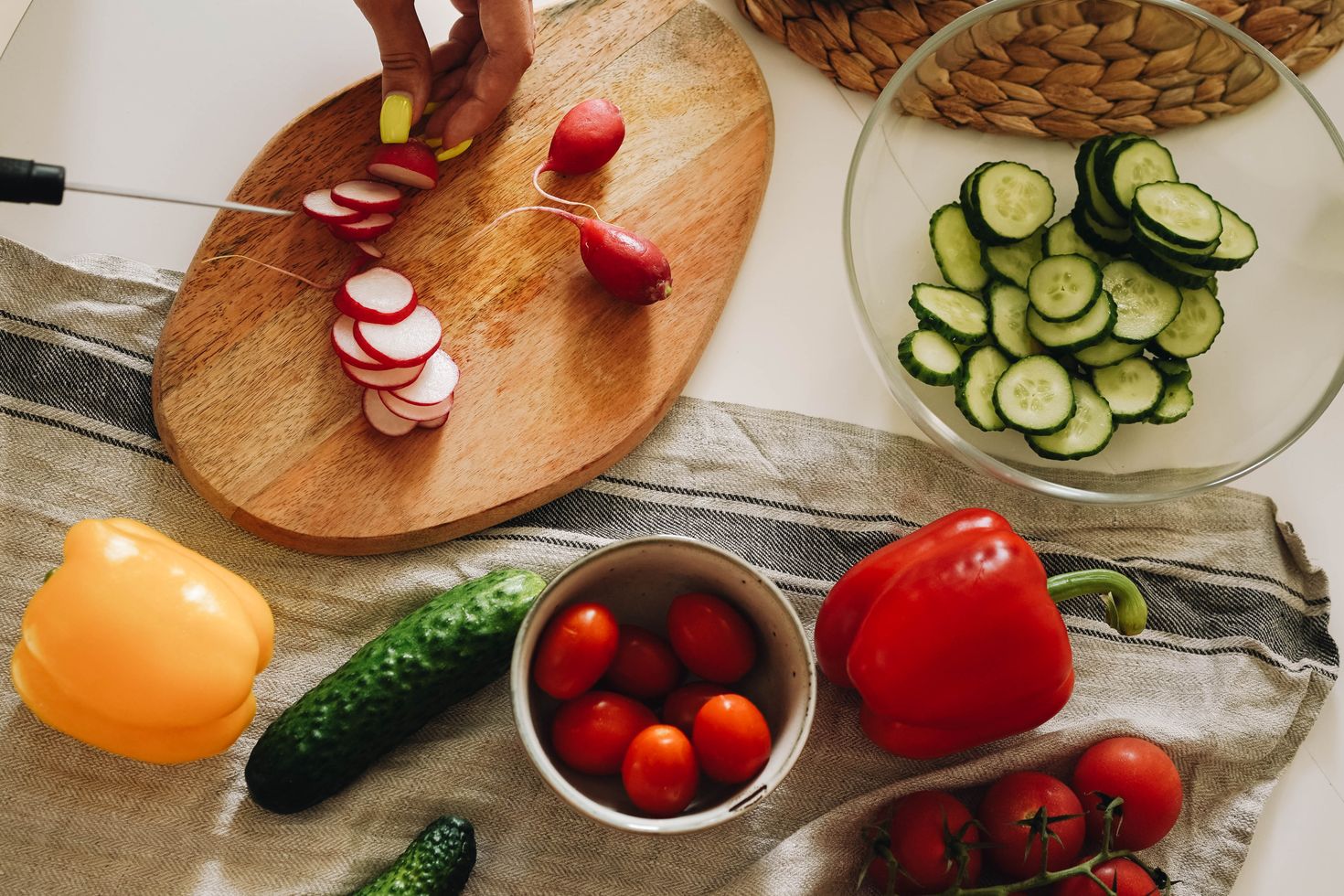
You don't need advanced cooking skills to start. Simple meals built around foods such as rice, lentils, eggs, frozen vegetables, or canned fish can be prepared in batches and reheated later. If you have access to a kitchen, making several servings at once can also reduce how often you rely on restaurant meals or delivery.
4. Make Simple Ingredient Swaps
Small ingredient changes can lower the calories in a meal without requiring you to give up foods you enjoy. The National Heart, Lung, and Blood Institute (NHLBI) recommends replacing higher-calorie foods with lower-calorie alternatives and checking nutrition labels because calories vary by product.
Here are a few swaps to try:
| Instead of | Try |
|---|---|
| Sour cream | Plain low-fat yogurt |
| Regular chips | Air-popped popcorn |
| Cream-based soup or sauce | Broth- or tomato-based options |
| Larger amounts of cooking oil | A small amount of oil or cooking spray |
| Regular mayonnaise | Light mayonnaise or mustard |
| Creamy salad dressing | Lemon juice, vinegar, or a lower-calorie dressing |
| Cookies or other sweets | Fruit |
You don't need to make every swap at once. Start with the ones that work naturally with the meals you already eat.
5. Fill Up on Protein and Fiber
Protein and fiber can help make meals more satisfying. Fiber, in particular, helps you feel fuller for longer. You can add more of both with simple foods such as eggs, beans, lentils, Greek yogurt, whole grains, and vegetables.
A few practical habits:
- Include a source of protein in your meals: Eggs, canned tuna, Greek yogurt, beans, and lentils are affordable options that work in many simple meals.
- Add vegetables when you can: Fresh or frozen vegetables can increase the volume and fiber content of a meal without adding many calories.
- Choose fiber-rich carbohydrates: Oats, brown rice, whole-wheat bread, beans, and lentils are useful sources of fiber.
- Build balanced meals: Pairing protein with fiber-rich foods can make meals more filling and easier to sustain over time.
International grocery stores may also be useful places to find familiar protein-rich staples such as lentils, chickpeas, tofu, or beans, depending on what's available near your campus.
6. Slow Down and Eat Without Screens
Eating more slowly can give you more time to notice when you're getting full. It may take at least 15 minutes for your brain to recognize that your stomach is full.
A few habits can help:
- Slow down between bites: Give yourself time to enjoy the food and notice how full you feel.
- Don't eat straight from a bag or container: Put a portion on a plate or in a bowl before you start eating.
- Limit distractions during meals: Try to avoid eating while watching videos, studying, or doing other activities.
- Pause during your meal: Take a moment before getting more food to decide whether you're still hungry.
7. Read U.S. Nutrition Labels
The U.S. Nutrition Facts label shows the serving size and the number of calories in that serving. Some packages contain more than one serving, while certain products also show nutrition information for the entire package. The U.S. Food and Drug Administration (FDA) recommends checking how many servings you're actually eating or drinking.
Start with two parts of the label:
- Serving size: This tells you the amount the nutrition information is based on.
- Calories: This shows how much energy you get from one serving.
If you're used to food labels that show energy in kilojoules (kJ), U.S. labels may look different. One nutritional Calorie is equal to about 4.184 kJ, so 2,000 Calories is approximately 8,368 kJ.
8. Protect Your Sleep and Manage Stress

Sleep and stress can affect appetite and eating habits. Not getting enough good-quality sleep can affect the hormones that regulate hunger and fullness. Stress can also influence appetite and eating behavior.
Getting enough sleep and finding healthy ways to manage stress can therefore support the other changes you're making to your diet.
Building proper sleeping habits in college can support a more consistent routine. If stress becomes difficult to manage, learning how to improve your mental health can also help.
Late-night studying can also disrupt your usual eating routine. If you know you tend to get hungry while studying, keep a simple snack available so you're less likely to rely on vending machines or takeout.
How Many Calories Should You Actually Cut?
Your calorie needs depend on factors such as your age, body size, and activity level. The current Dietary Guidelines for Americans, 2025–2030 recommends adjusting your intake based on your individual needs.
CDC recommends gradual weight loss, noting that people who lose about 1 to 2 pounds per week are more likely to keep the weight off than those who lose weight more quickly. It doesn't set one daily calorie deficit that everyone should follow.
Instead of choosing an arbitrary calorie target, consider using the NIDDK Body Weight Planner to estimate how changes in calorie intake and activity may affect your weight over time. The National Institute of Diabetes and Digestive and Kidney Diseases also recommends choosing a reduced-calorie eating plan that is tailored to your health needs and that you can maintain.
If you want personalized guidance, check whether your campus health center offers access to a registered dietitian or healthcare provider. If you have an ISO plan, you can also use the doctor and hospital search to look for providers in your plan's network.
When Cutting Calories Goes Too Far
Reducing calories shouldn't leave you constantly hungry or make food a source of anxiety. If your eating habits become increasingly restrictive or start affecting how you feel physically or emotionally, it may be time to talk with a healthcare professional.
The National Institute of Mental Health (NIMH) notes that becoming fixated on weight loss or controlling food intake can be a sign of an eating disorder. Other warning signs may include severe food restriction, frequent dieting, distress or guilt around eating, or feeling tired much of the time.
If you're concerned about your relationship with food, check what counseling or student health services are available on your campus.
Campus health and counseling records are subject to privacy protections, although the exact rules depend on the institution and service. If a health condition affects your enrollment or you're considering reducing your course load, talk with your Designated School Official (DSO) before making changes.
The goal is to find an eating pattern that supports your health without making food feel stressful or overly restrictive. If cutting calories is making you feel worse, speak with a qualified healthcare provider.
Small Changes Add Up
Cutting calories doesn't have to depend on strict rules or major changes to the way you eat. Start with one or two adjustments that feel realistic, such as choosing water more often, cooking at home, or paying closer attention to portions. Once those changes become part of your routine, you can build from there.
Eating well is only one part of looking after your health while studying in the U.S. Understanding why health insurance matters can also help you prepare for medical care if you need it. If you're comparing coverage, learn how to choose the right health insurance plan based on your school requirements, budget, and plan benefits.
Frequently Asked Questions (FAQs)
What Is the 3-3-3 Rule for Losing Weight?
There isn't one officially recognized 3-3-3 rule for weight loss. The term is used online for several different eating and exercise routines, but it isn't a standard recommendation from major health organizations. Instead of following a formula based on the name alone, focus on an eating pattern that meets your nutritional needs and is realistic to maintain.
Is 1,500 Calories a Day Enough?
It depends. Your calorie needs are influenced by factors such as your age, body size, and activity level, so 1,500 calories may be appropriate for some adults and too little for others. The NIDDK Body Weight Planner can provide a more individualized estimate for adults, while a registered dietitian or healthcare provider can offer personalized guidance.
How Can I Burn an Extra 500 Calories a Day?
You don't need to burn exactly 500 calories through exercise each day. The number of calories you use during physical activity varies based on your body weight, the activity, and how long you do it. For general health, CDC recommends at least 150 minutes of moderate-intensity aerobic activity each week, along with muscle-strengthening activity on at least two days.
Do I Have to Count Every Calorie to Lose Weight?
No. Calorie tracking is one tool, but it isn't required. Paying attention to portions, drinks, and the foods you choose can help you adjust your overall intake without recording everything you eat. If you want a clearer sense of your current habits, keeping a food diary for a short period can help you identify changes you may want to make.
Is Healthy Food More Expensive in the U.S.?
Healthy eating doesn't always have to cost more. The U.S. Department of Agriculture (USDA) recommends budget-friendly options such as beans, whole grains, eggs, canned fish, and frozen vegetables. Comparing unit prices, planning meals before shopping, and choosing foods that store well can also help you keep grocery costs under control.
This article was written by ISO Customer Care. It is intended for general informational purposes and does not constitute medical or nutritional advice. For personalized guidance on calorie intake and weight management, consult a healthcare professional or registered dietitian.